
Dikey Açılı Rotorlar
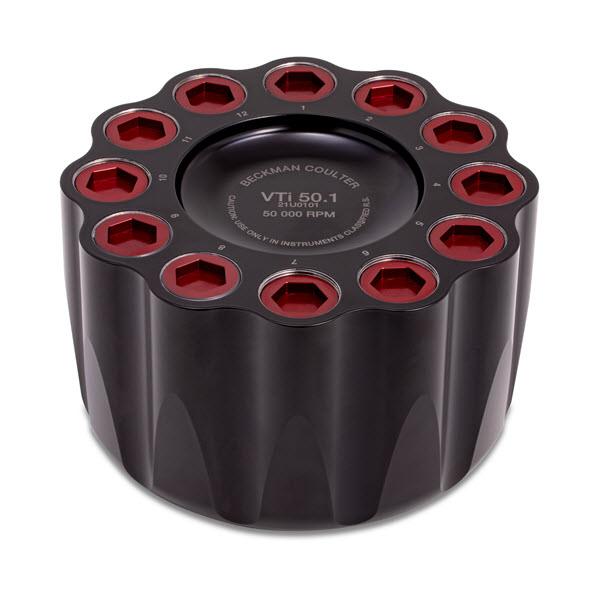
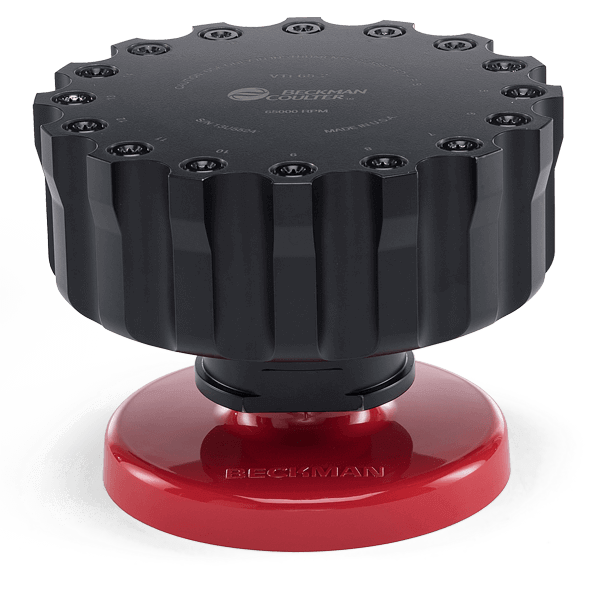
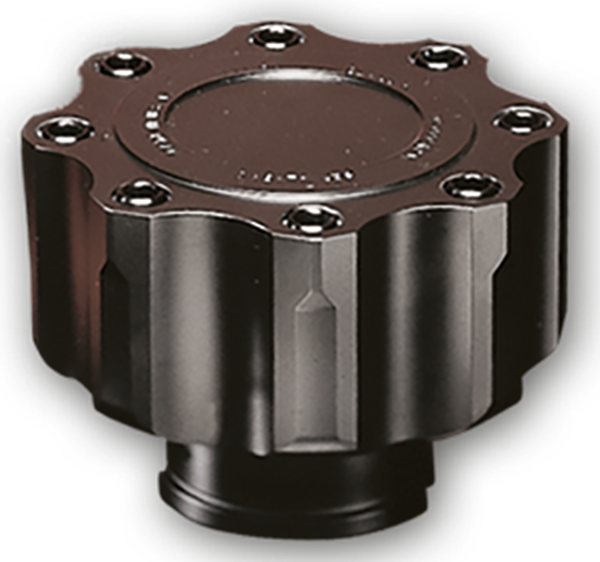
Dikey açılı rotorlar, rotor tipleri arasında en kısa yola, en hızlı çalışma süresine ve en yüksek çözünürlüğe sahiptir.
Dikey rotorda, çalışma sırasında tüpler dikey konumdadır. Bu rotorların kısa yol uzunluğu ve düşük k faktörleri, partikülün pelete gitmek için sadece kısa bir mesafeye sahip olması anlamına gelir ve bu da uygulamanın çalışma süresini azaltır.
Pelet oluşturmak için kullanılacak en iyi rotor bu değildir, çünkü tamamen dikey bir tüpteki merkezkaç kuvveti, peleti tüpün dış duvarı boyunca dağıtır.
Dikey bir rotor aşağıdaki amaçlar için kullanılır:
- İzopiknik ayırmalar – özellikle sezyum klorürdeki DNA'nın sarılması için
- Viral partiküller için olduğu gibi gradiyent ve yoğunluk tamponu ayırmaları
Bir gradiyent yoğunluk tamponu ayırma işlemi:
- Tüp tabanında daha yüksek yoğunluklu tamponla biten yoğunluk katmanlarının artırılması
- “Daha yumuşak” tampon arayüzünde [hareketli], peletli numuneleri izole etmek için idealdir
Yeni Intellifuge Calculator’u [Hesaplayıcı] çalışırken görmek için buraya tıklayın.

FAQ on Vertical Angle Rotors
What applications are vertical rotors commonly used for?
Vertical rotors are commonly used for isopycnic centrifugation, density gradient separations, plasmid DNA purification, viral particle isolation, lipoprotein analysis and other ultracentrifugation workflows that require rapid equilibrium separations.
What is a vertical rotor?
A vertical rotor is an ultracentrifuge rotor that maintains sample tubes parallel to the axis of rotation during centrifugation. This geometry creates the shortest sedimentation path of any rotor design and helps accelerate density gradient separations.
Why are vertical rotors used for isopycnic centrifugation?
Vertical rotors provide a very short path length through the density gradient. This allows particles to migrate quickly to their equilibrium density, helping reduce run times while maintaining high separation resolution.
What is the k-factor of a centrifuge rotor?
The k-factor is a measure of a rotor's sedimentation efficiency. Lower k-factor values generally indicate faster particle sedimentation and shorter run times. When comparing ultracentrifuge rotors, the k-factor can help determine which rotor may provide the most efficient separation for a specific application.
Are vertical rotors suitable for pelleting applications?
Vertical rotors are generally not the preferred choice for pelleting. Because the tubes remain vertical during centrifugation, pellets may spread along the outer wall of the tube rather than forming a compact pellet at the bottom. Fixed-angle or swinging-bucket rotors are typically better suited for pelleting workflows.
What is the difference between a vertical rotor and a fixed-angle rotor?
Vertical rotors are primarily designed for density gradient and isopycnic separations, where particles move through a gradient to reach their equilibrium density. Fixed-angle rotors are typically optimized for pelleting applications, where particles sediment toward the tube wall and form a pellet. The choice depends on whether the goal is particle pelleting or high-resolution gradient separation.
When should I use a near vertical rotor instead of a vertical rotor?
Use a near vertical rotor instead of a vertical rotor if particles in your solution will pellet out of solution and risk contaminating your gradient bands. In a near vertical rotor, those containments will move to the bottom of the tube instead of remain on the side wall, as they do in a vertical rotor.
